



Across the world, many people see beads as simply fashion accessories. In Ghana, however, they represent identity, heritage, status, and livelihood. From naming ceremonies to festivals and marriage rites, beads remain deeply woven into the country’s cultural traditions while also supporting thousands of artisans and traders.
A visit to TK Beads Industry in Amrahia within the Kpone Katamanso Municipal Assembly revealed how traditional bead-making continues to preserve culture while creating employment opportunities for young people and vulnerable groups.
For more than 23 years, Ernest, Managing Director of TK Beads Industry, has built more than just a business. What started as a craft enterprise has grown into a thriving operation employing over 40 workers, many of whom rely on bead-making as their primary source of income.
Beyond job creation, the company has also become a source of mentorship and social support for young people facing difficult circumstances, including single parents, street-connected youth, and individuals unable to continue their education because of financial hardship.
According to Ernest, some of the people trained through the business have gone on to pursue university education, while others have successfully enlisted in the military.
“These stories show that traditional crafts can transform lives,” he said.
How bead-making remains deeply rooted in Ghanaian culture
Across Ghana, beads carry deep cultural and symbolic meaning. They are commonly used during naming ceremonies, puberty rites, festivals, weddings, and chieftaincy events.
Certain beads are reserved for kings, chiefs, and queen mothers, symbolising authority, royalty, and prestige. Waist beads also remain popular among women for aesthetic and cultural reasons, while children traditionally wear beads as a way of tracking physical growth.
The continued demand for beads across generations has helped sustain the local industry despite growing competition from imported products.

Inside the bead-making process at TK Beads Industry
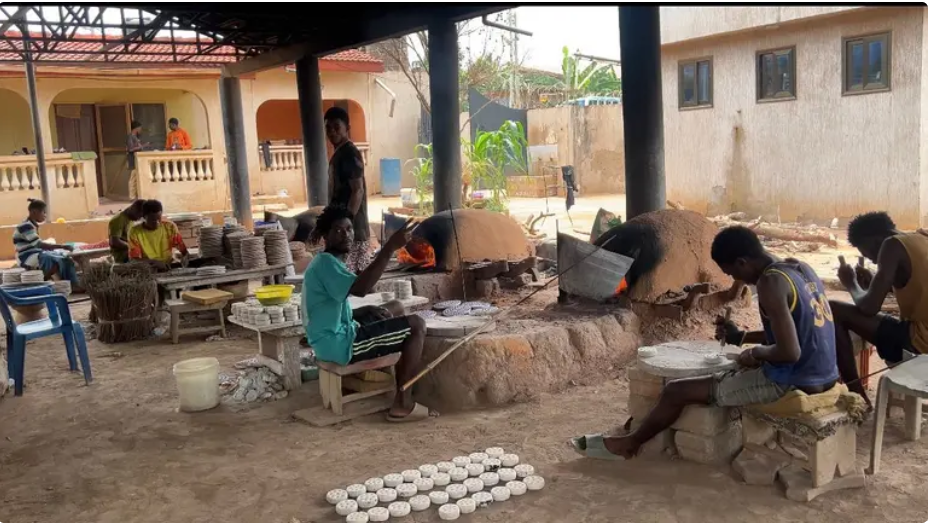
At TK Beads Industry, artisans transform discarded glass bottles into handcrafted beads using techniques passed down through generations.
The production process involves two main methods: transparent glass bead-making and powdered glass bead-making.
Collected bottles are first sorted according to colour before being crushed into fine particles. The powdered glass is then carefully poured into moulds and placed inside high-temperature furnaces, where the materials melt and fuse into beads.
Once cooled, the beads are polished, decorated, and assembled into necklaces, bracelets, waist beads, and other ornaments.
The process requires patience, skill, and physical endurance, especially for workers who operate the furnaces under intense heat conditions.
Beyond preserving traditional craftsmanship, the recycling process also contributes to environmental sustainability by repurposing waste materials into valuable cultural products.
With a workforce of about 45 artisans, the company produces an average of eight to ten necklaces per worker daily, depending on the complexity of the design.

How bead-making is creating jobs for vulnerable youth
For many workers, bead-making has become more than a source of income. It has also provided skills, stability, and personal growth.
One employee who has worked with the company for two years described the experience as life-changing.
“I came to make enquiries and was asked to apply. I applied, went for the interview, and got the job. The more I work, the more I learn,” he said.
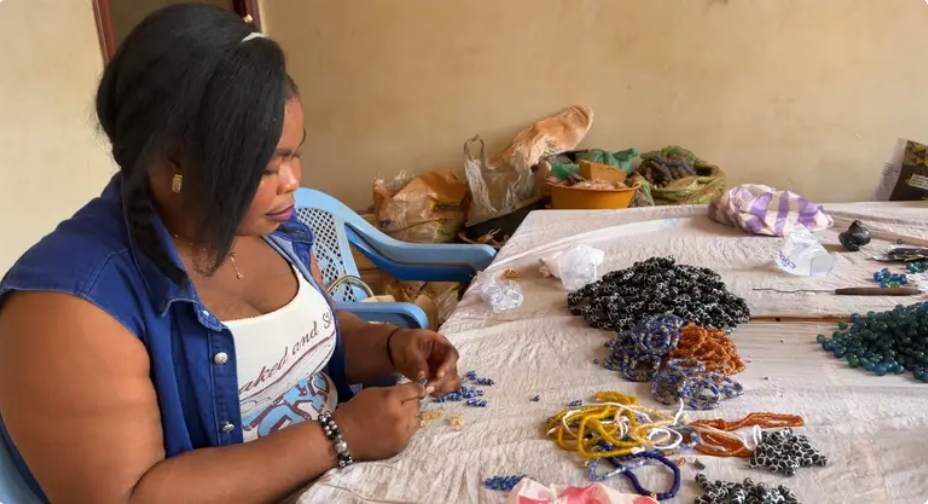
Another worker highlighted both the beauty and financial realities of the industry.
“Some people say there is a lot of money in the bead business, but for us workers, the pay is small unless you really understand the work. Beads are beautiful, and I encourage everyone to buy from us,” he noted.
Others spoke about the physically demanding nature of the work, which often involves long hours.
“I come to work at dawn, around 4 a.m., and leave around 4 p.m. The bead business is lucrative for those who sell it, not the manufacturers,” another worker explained.
One long-serving employee responsible for managing the furnace also revealed the risks involved in the production process.
“I control the fire. Sometimes the heat burns, but it is part of the work. The company has said they will provide protective equipment for us,” he said.
The challenges facing Ghana’s local bead industry
Despite its cultural importance and economic potential, Ghana’s bead industry continues to face significant challenges.
One major concern is competition from cheaper machine-produced imports, particularly from China. However, local producers insist that handcrafted Ghanaian beads remain unique because of their authenticity and cultural value.
“Ghanaian beads are the natural beads,” Ernest said, adding that international buyers continue to seek them out because of their originality.
Limited access to funding also remains a major obstacle for many local manufacturers.
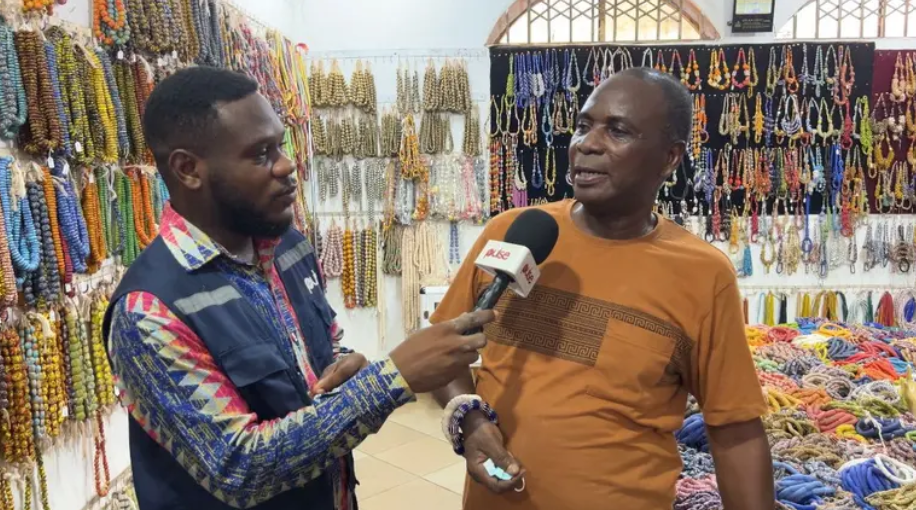
According to Ernest, support from organisations such as the Association of Ghana Industries has been constrained by financial limitations, making expansion difficult for small businesses within the sector.
“We are hoping the government will support us so we can expand and help more people, especially single parents and street children,” he said.
Rather than grants alone, he believes affordable loans could help local producers increase production and employ more workers.
“If it is a loan, I can employ more people than I do now,” he added.
Why Ghanaian handcrafted beads still stand out globally
Despite the challenges, industry players remain optimistic about the future of bead-making in Ghana.
Growing interest in locally made products and sustainable craftsmanship is helping to increase appreciation for authentic Ghanaian beads both locally and internationally.

For workers at TK Beads Industry, every handcrafted bead represents more than decoration. It symbolises creativity, resilience, culture, and hope for a better future.
As Ghana continues to promote local industries and cultural heritage, bead-making is emerging not only as an important traditional craft but also as a meaningful source of sustainable employment for many young people across the country.